

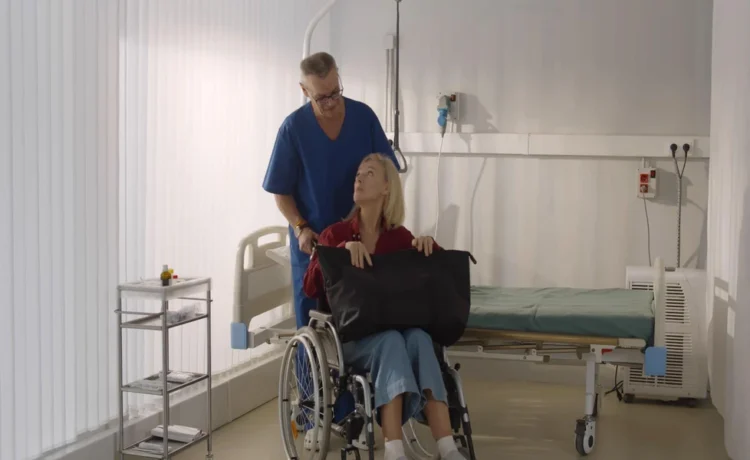
Image Recommendation: A patient being wheeled out of a same-day surgery recovery bay, a nurse handing over discharge instructions, bright and calm clinical setting.
Ask someone what decides whether an operation needs an overnight hospital bed, and most will point to how serious the procedure sounds. Gallbladder removal feels like it should mean a ward stay. A cataract operation feels minor enough to skip one. Neither assumption is really how the call gets made. What actually drives it is how predictable the first few hours of recovery are expected to be, which is why plenty of procedures people assume need admission are routinely done and discharged on the same day.
Four Things a Procedure Has to Satisfy Before It’s Booked as Day Surgery
A surgeon weighing whether to schedule something as outpatient surgery in Singapore rather than an inpatient admission is working through a fairly specific set of conditions, not a general impression of how major the operation sounds. Procedures commonly booked this way include hernia repairs, laparoscopic gallbladder removal, diagnostic endoscopy, carpal tunnel release, hysteroscopy, cataract surgery, and arthroscopy. Behind each booking sits roughly the same checklist:
- Pain and bleeding can be reasonably predicted and managed with oral medication rather than ongoing IV monitoring.
- The anaesthetic used is one the patient would be expected to recover from within a few hours.
- No overnight airway, cardiac, or neurological monitoring is anticipated, based on the patient’s individual health history.
- A responsible adult can take the patient home and stay with them overnight, since discharge isn’t approved without one.
A Shorter Stay Doesn’t Mean a Shorter List of Safety Checks
It’s a reasonable assumption that a facility without inpatient wards must be a scaled-down version of a hospital, but that’s not quite how a purpose-built day surgery centre in Singapore tends to be set up. Foundation Healthcare’s ambulatory centre at Novena, for example, runs four operating theatres, two of them lead-lined for procedures requiring radiation shielding, alongside two endoscopy suites, eleven recovery bays, and a dedicated recovery suite. The absence of overnight beds reflects the kind of procedures scheduled there, not a reduction in equipment or monitoring. If something unexpected comes up mid-procedure that calls for extended observation, the arrangement is to transfer the patient to a hospital, and that threshold is assessed individually by the care team involved.
What Happens in the Hours After You’re Discharged
Discharge isn’t the same as simply walking out once the operation ends. Before anyone leaves, a nurse checks that pain is under control, vital signs have stabilised, and, depending on the procedure, that the patient can walk a short distance or pass urine without difficulty. What changes once someone is home is who’s doing the watching, which is why the discharge instructions tend to matter more than they seem to in the moment.
| Before Leaving the Centre | Once You’re Home |
| Vitals and pain checked by a nurse before sign-off | Pain medication taken on a set schedule, not only when it spikes |
| Wound or dressing reviewed and explained | Dressing kept dry, checked daily for swelling or discharge |
| Mobility or bladder function confirmed where relevant | Gentle movement only, strenuous activity avoided as advised |
| Follow-up appointment or call scheduled | Fever or unusual bleeding reported immediately, not monitored alone |
Does Every Procedure Actually Qualify for a Same-Day Discharge?
Not automatically, and this is where individual health history tends to matter more than the procedure’s name on paper. Someone with a usually straightforward case might still be advised to stay longer if they have a complicating factor, such as a heart condition, a bleeding disorder, or limited support at home. The reverse can also be true, where a procedure that sounds more involved still fits the day surgery criteria once a doctor has assessed the specific patient. There isn’t a universal list that applies the same way to everyone, which is part of why this decision generally sits with the surgical and anaesthetic team rather than something worked out from a brochure beforehand.
Three Questions Worth Raising Before the Day of the Procedure
- What level of pain is typical for this specific procedure, and what’s provided to manage it at home?
- Who needs to be available to take you home and stay overnight, and for how long is that support expected?
- What exact symptoms should prompt a call to the centre, versus going straight to an emergency department?
The Shift Toward Same-Day Care Is About Fit, Not Shortcuts
The growing number of procedures handled this way isn’t a sign that hospitals are being bypassed to save time or cost. It reflects a more deliberate matching of setting to what a specific recovery requires, with a hospital bed reserved for cases where ongoing monitoring genuinely changes the outcome. For a patient, the more useful question usually isn’t how major an operation sounds, but whether their own health history and home support fit what that procedure needs.
Working out whether a specific procedure fits a same-day pathway is easier with a direct conversation than a guess. Contact Foundation Healthcare to ask about what a day surgery booking would involve for your situation.

